It’s no longer enough to simply authenticate who is speaking. In the age of sophisticated deepfakes, we must authenticate that a real, live human is on the line. It’s time to equip your organisation with Deep Truth and protect your most critical interactions against the most sophisticated threat yet.
Introducing the Counter-Offensive: ‘Deep Truth’ – a Paradigm Shift in Biometric Security.
At Auraya, we understand that the landscape of digital identity is not just a set of static data points, but a dynamic battleground. The rise of sophisticated deepfake technology has exposed a critical vulnerability in traditional biometric authentication systems.
Generic deepfake detectors attempt to solve this by simply “listening for robotic anomalies” or scanning for AI artifacts. However, academic research has consistently proven that these generic approaches fail when confronted with new, unseen synthetic generators or when fraudsters introduce background noise to mask their attacks.
We recognise that it’s time to move fundamentally from merely “guessing” if a voice is AI to being armored against it.
Auraya’s response is the Deep Truth counteroffensive. Built on a patented, multi-layered security architecture, Deep Truth ensures the future of security is not just about who is speaking, but authenticating the presence of a living, breathing human being operating in a trusted context.
The Deep Truth Difference: A Patented, Layered Defense
The fundamental flaw in legacy systems is their reliance on a single point in time phrase match. A deepfake, meticulously crafted, can mimic the acoustic qualities of a target’s voice, fooling these systems entirely.
Layer 1: Audio Signal Anomaly Detection (The Baseline)
Before assessing who is speaking, Deep Truth performs foundational digital forensics. This first line of defence analyses the acoustic properties of the incoming audio stream to detect known synthetic artefacts, unnatural frequencies, or signs of digital manipulation. While many in the industry stop here, Auraya uses this baseline anomaly detection merely as the first gate to filter out low-effort, generic deepfakes.
Layer 2: Patented Speaker-Specific Deepfake Modeling (The Core Differentiator)
Generic detectors use a one-size-fits-all approach to ask, “Is this voice AI?” Auraya flips this paradigm entirely.
Auraya maintains an extensive, continuously updated library of synthetic voice generators. Using this library, our patented process creates dedicated detection capabilities mapped directly to voice models created by the synthetic generators.
The Dual-Check Advantage: During verification, Deep Truth performs a simultaneous dual-check. It verifies that the biological voice belongs to the authorised person, AND it actively checks to ensure the audio is not a close match to known synthetic generators. By mathematically modelling how a synthetic generator would try to clone a specific user, Auraya deflects sophisticated deepfakes attacks.
Layer 3: Continuous, Passive Monitoring
Deepfake attacks do not always occur at the beginning of an interaction. A fraudster might take over a call that has passed an initial security screening process, only to seamlessly switch the call to a deepfake audio injection mid-conversation to authorize a high-value transaction. It’s now possible to continuously and passively monitor the speaker in the background throughout the entire interaction, ensuring the biological voice remains consistent and a deepfake isn’t swapped in.
Layer 4: Dynamic One-Time Passcodes (OTP) and Active Challenges
Deep Truth can force a random, dynamic challenge—such as asking the user to read a dynamically generated sequence of numbers like a one time pass code.
A fraudster cannot use a pre-recorded voice. Furthermore, forcing a deepfake AI to generate specific, random words in the target’s voice in real-time introduces another more difficult security signal to overcome.
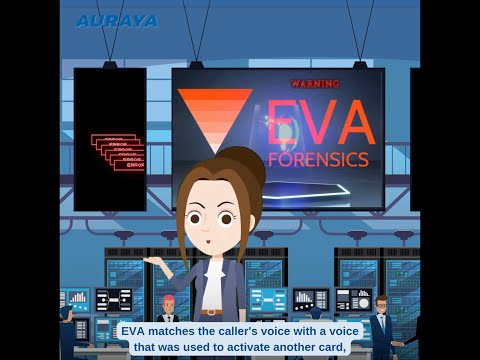
Layer 5: EVA Contextual and Device Forensics
While acoustic analysis is paramount, true security requires context. Even if a fraudster develops a highly sophisticated synthetic voice, it is possible to consume real-time device ID information to determine the trustworthiness of the interaction source. This capability continuously analyses:
- Device Familiarity: Is this device regularly used by the authorized client wanting to be authenticated, or is it completely unknown?
- SIM Swap Detection: Has the mobile device’s SIM card been recently swapped or compromised?
- Watchlists: Is the device ID or network associated with a known bad actor or fraudulent activity?
By cross-referencing acoustic Deep Truth with device-level intelligence, an advanced system can instantly flag and block an interaction where a seemingly perfect synthetic voice originates from an untrusted or compromised source.
Denial of Synthetic Attacks
For too long, the security conversation around AI has been centred on the terrifying, escalating nature of the threat. With Deep Truth and EVA Forensics, Auraya is fundamentally shifting the focus to the solution.
We are establishing a new standard for biometric authentication—one where synthetic attacks are not just passively detected, but detected and denied access.
In an era where sonic replicas that can defeat human capability can be created in seconds, elevating your security posture is an organisational imperative for fraud prevention and regulatory compliance. Deep Truth provides the security assurance required to meet the risk mitigation required for this new threat.