The turn of the millennium heralded a shift in how we secure our digital and physical lives. For 25 years now, the use of unique biological characteristics to verify identity has moved from the realm of science fiction into the everyday. What began as rudimentary fingerprint scanners and novelty iris readers in high-security facilities is now woven into the fabric of commerce, travel, and personal communication. Over this quarter-century, the landscape of identity verification has been fundamentally reshaped.
Explore the transformative journey of biometric security, examining what has profoundly changed, what core principles have endured, and the critical implications for businesses grappling with the escalating threats posed by Artificial Intelligence, deepfakes, and sophisticated identity fraud.
From Novelty to Necessity
The most striking change in biometric security over the last 25 years is its democratisation and ubiquity. Way back in the late 90s to early 2000s, implementing biometrics was expensive, requiring specialised hardware and complex backend systems.
Today, everything has changed. The pocket-sized computer known as the smartphone has made high-quality biometric capture and processing universally accessible.
Hardware and Sensor Evolution
Early fingerprint scanners were bulky, often relying on optical capture (taking a picture of the print), and easily fooled by high-resolution copies. The modern equivalent, exemplified by capacitive sensors embedded beneath smartphone screens or in laptop power buttons, is faster, smaller, and significantly more secure, utilising electrical currents to map the ridges and valleys of a finger.
The evolution of facial recognition has been even more dramatic. Initial systems relied on 2D image analysis, which was notoriously susceptible to simple photograph spoofing. The introduction of 3D depth-sensing and liveness detection (e.g., Apple’s Face ID) revolutionised this, analysing thousands of data points and detecting subtle human characteristics like blinking and minute facial movements. This progression has shifted facial recognition from a niche application to a primary method of user authentication.
The Ascent of Voice Biometrics
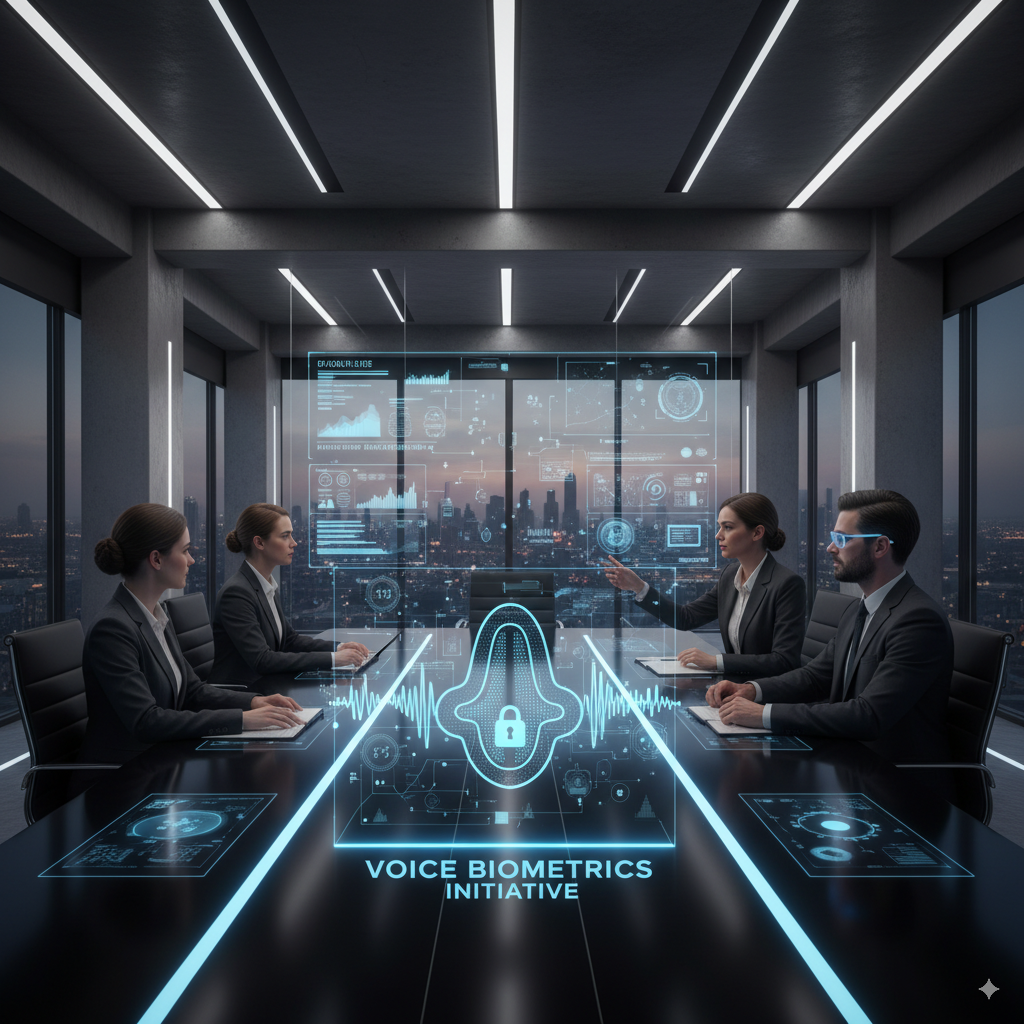
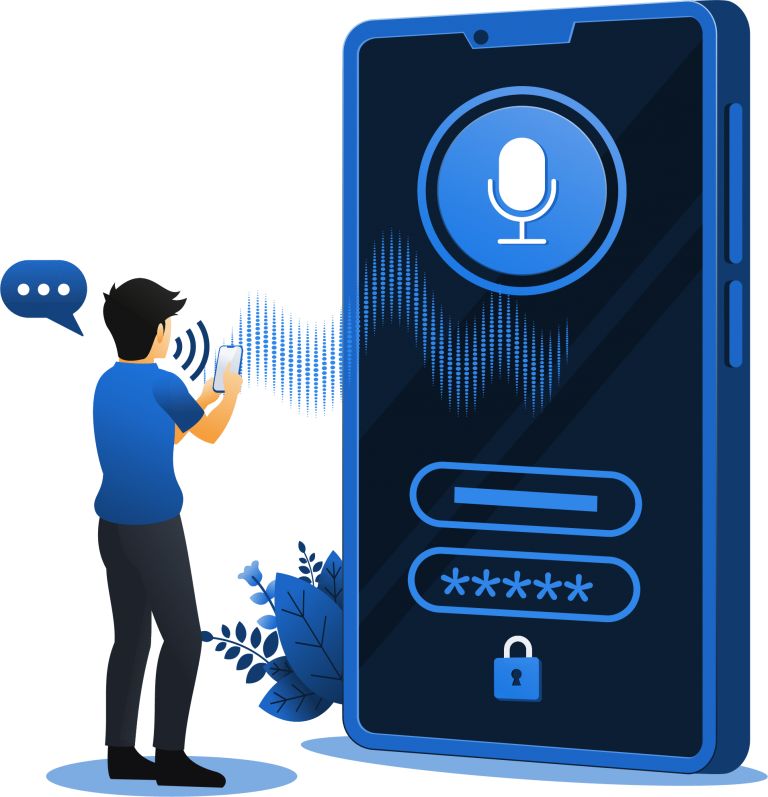
While fingerprint and facial recognition dominate current deployment, voice biometrics are rapidly emerging as a critical frontier in identity verification, particularly for remote and conversational interfaces. Voice offers a unique blend of high security and unparalleled convenience, being the only biometric that is entirely frictionless in the context of a phone call, smart device interaction, or virtual assistant command.
But to understand why voice is poised for mass adoption, you simply need to dive deeper and let its voice be heard more loudly.
Ubiquity and Zero Hardware Barrier
Unlike face or fingerprint scanning, voice authentication requires no specialised hardware beyond a standard microphone, a component present in every smartphone, PC, and smart speaker. This universal availability lowers the barrier to entry for businesses and consumers alike.
Contextual Security
Voice analysis can easily be integrated into call centers and IVR (Interactive Voice Response) systems, allowing for passive, continuous verification of the speaker during the interaction. This replaces cumbersome security questions with invisible, real-time authentication.
Liveness and Behavioral Integration
Modern voice systems don’t just recognise who is speaking (voiceprint); they also analyse how they are speaking (pitch, cadence, accent) and the acoustic environment (liveness detection). AI can flag robotic intonation or a lack of background noise in a way that suggests a recording or deepfake, offering a powerful anti-spoofing mechanism when combined with advanced neural network analysis.
The future of identity is conversational, and voice biometrics are the key to securing that interface, ensuring that identity is verified not just at login, but throughout the entire customer or employee interaction.
Data Processing and Accuracy
Perhaps the greatest leap has been in the backend intelligence powering these systems.
Early biometric algorithms were relatively simple, template-matching processes. Today, they are powered by Deep Learning and neural networks. Modern biometric systems can accurately identify an individual from a massive database, match partial or obscured prints, and compensate for variations due to aging, injury, or environmental conditions. The False Acceptance Rate (FAR) and False Rejection Rate (FRR) have plummeted, making modern biometrics both highly secure and user-friendly.
Multi-Factor and Behavioral Biometrics
A significant shift is the move beyond single-modality biometrics (just a voice, fingerprint or face) to multi-factor and continuous authentication. Modern systems often combine a biometric factor with a possession factor (the device) or knowledge factor (a PIN). Even more revolutionary is the emergence of behavioral biometrics, which continuously analyses the unique ways an individual interacts with a device—their typing cadence, mouse movement patterns, scrolling speed, and even the pressure they exert on a screen. This invisible layer of security offers an ongoing verification of identity, mitigating the risk posed by compromised credentials.
Enduring Principles of Identity Verification
Despite the technological revolution, the fundamental principles governing biometric security have remained constant, serving as the bedrock upon which modern systems are built.
The Imperative of Uniqueness
The core value proposition of biometrics remains unchanged: the human body provides unique, measurable, and verifiable identifiers. A password can be shared, while a voice cannot ( at least not easily). The constant pursuit of ever-more unique and reliable modalities — from vein patterns to DNA sequencing — underscores the enduring principle that identity rooted in physiology is the gold standard of authentication.
But because nothing can ever be truly easy, there’s also the trade-off.
The Trade-off Between Security and Convenience
For 25 years, the industry has wrestled with the perennial tension between security and user experience. Early, highly secure systems (like iris scanners) were often cumbersome and slow, leading to user resistance. Conversely, systems that were too convenient (like simple 2D face scans) were often insecure. The constant, and successful, effort has been to find the sweet spot: making authentication instantaneous and frictionless (high convenience) while maintaining cryptographic-level security (high security). Hence the rapid proliferation of voice biometrics.
How Ethics, Privacy, and Governance Shaped the Industry
From its inception, the biometric industry has been uniquely burdened by ethical considerations due to the intimate nature of the data involved. Unlike passwords, a compromised biometric cannot be changed. This ethical imperative has driven self-regulation and, eventually, strict governance.
The early years saw concerns over misuse, particularly in surveillance and tracking. This led to the development of key privacy-preserving standards. The principle of purpose limitation — only using the biometric data for the specific, stated purpose of authentication — became a critical ethical barrier. Moreover, global regulatory frameworks, most notably the EU’s GDPR (General Data Protection Regulation) and the US state-level privacy acts like the CCPA (California Consumer Privacy Act), formalised the handling of biometric data as a special category of sensitive personal information. These laws mandate explicit consent, ensure data minimisation, and require transparency regarding data processing and retention, effectively shaping how businesses operate and innovate in this space.
Lessons Learned from Multiple Technology and Threat Cycles
The 25-year history of biometrics is a series of escalating threat cycles, each one forcing fundamental industry improvements:
- The Spoofing Cycle (2000s): The ease with which early optical fingerprint scanners were fooled by gummy fingers or 2D facial recognition systems were defeated by photos taught the industry that the sensor itself was the weakest link. What did we learn? Liveness detection is non-negotiable.
- The Database Breach Cycle (2010s): Large-scale breaches demonstrated the catastrophic risk of storing centralised raw biometric data. What did we learn? Irreversible biometric templates must be the universal standard.
- The AI/Deepfake Cycle (2020s and Beyond): The current cycle demonstrates that AI can generate synthetic attacks indistinguishable from reality to the naked eye. What did we learn?Authentication must be continuous, context-aware, and rely on multi-layered AI-powered anti-spoofing.
The Looming Threat: AI, Deepfakes, and Identity Fraud
The convergence of advanced biometrics and powerful AI presents a paradox: AI enhances security, but it also arms the adversary. As businesses increasingly rely on biometrics, the risks associated with sophisticated identity threats have never been higher.
The Rise of Deepfake Attacks
The most immediate threat comes from deepfakes, AI-generated media that convincingly mimics a person’s face or voice. In the past, attackers needed to steal a physical print or photo. Today, sophisticated deepfake technology can generate high-resolution, lifelike video or audio that can potentially fool older, less sophisticated biometric systems.
- Impact on Face/Voice Verification: A deepfake of a CEO’s voice could be used to authorise fraudulent wire transfers (known as deepfake-enabled business email compromise), or a video deepfake could trick a remote identity verification process.
- The Countermeasure: This escalating threat has driven the rapid advancement of AI-based liveness detection (or anti-spoofing) measures. These cutting-edge tools analyse minute discrepancies like slight changes in skin reflectivity, inconsistent shadows, or subtle pixel irregularities that reveal the input is synthetic rather than a real, living person.
AI and Advanced Credential Stuffing
AI is also being leveraged to weaponise stolen credentials. While biometrics eliminate the need for passwords, many systems are hybrid. AI can be used to optimise phishing campaigns, generate highly convincing social engineering attacks, and accelerate credential stuffing attempts.
The ultimate goal for the cybercriminal remains bypassing the biometric gate to access the underlying accounts.
Why Lineage and Standards Matter More Than Ever
In the era of AI-driven fraud, the integrity and trustworthiness of a biometric system is paramount.
The concept of lineage — knowing the entire chain of custody from the sensor hardware to the final authentication decision — is critical. Businesses need to ensure their solutions adhere to international standards. These standards define metrics for accuracy, interoperability, and most importantly anti-spoofing resilience. Purchasing a non-compliant biometric solution in 2026 is an active invitation to deepfake attacks. Robust standards provide the necessary assurance that the system has been tested against known attack vectors.
The Impact on Business
For businesses, the 25-year biometric journey underscores the urgent need to overhaul traditional identity and access management strategies.
1. Moving to Biometric-First Identity
The foundational shift for businesses is to adopt a biometric-first approach, moving away from relying solely on weak passwords and single-factor authentication. This includes:
- Customer-Facing: Utilising mobile-based biometrics (Voice ID, Touch ID, Face ID) for customer login, transaction authorisation, and account recovery to drastically reduce fraud and enhance conversion rates.
- Employee Access: Implementing multi-factor authentication that requires biometrics for access to critical internal systems and privileged accounts.
2. Investing in Anti-Spoofing and Liveness Detection
Given the deepfake threat, businesses must treat liveness detection not as an add-on but as a fundamental requirement for any facial or voice authentication system. Any vendor solution must demonstrate robust, AI-powered anti-spoofing capabilities that are resistant to presentation attacks (using a photo or video) and generative attacks (using deepfakes).
3. Embracing Continuous and Behavioral Biometrics
For high-value transactions or sensitive data access, one-time authentication is insufficient. Businesses must explore continuous verification using behavioral biometrics. If an authorised user’s normal typing rhythm or scrolling pattern abruptly changes after login, the system should automatically flag the session as suspicious and require re-authentication, offering an invisible layer of defense against hijacked accounts.
4. Navigating Regulatory and Ethical Compliance
The widespread deployment of biometrics necessitates a heightened focus on privacy. Regulations like the GDPR and CCPA treat biometric data as sensitive personal information. Businesses must ensure:
Compliance Area: Consent
Requirement: Obtain clear, explicit, and informed consent before collecting or processing biometric data.
Compliance Area: Data Minimisation
Requirement: Only collect the biometric data absolutely necessary for authentication and store only the irreversible template, not the raw data.
Compliance Area: Data Retention
Requirement: Establish clear policies for the secure destruction of biometric templates when the user/employee relationship ends.
A Forward-Looking View on Identity Risk and Responsibility
The evolution of biometric security over the last 25 years has been a history of increasing sophistication, convenience, and reach. It has successfully replaced flawed knowledge-based systems with identity rooted in who we are. As we look ahead, the battle between biometric defense and AI-powered identity theft will only intensify.
Rest assured, the next 25 years will not just be about technological advancement but will be defined by the responsible deployment of these technologies. The risk will shift from simple data theft to identity manipulation, but the overall success and wins will also shift alongside.
Businesses are now the custodians of immutable identity markers. Their responsibility extends beyond simply preventing unauthorised access; they must ensure that the technologies they deploy are ethically sound, regularly audited for bias, and capable of resisting the most advanced synthetic attacks. Businesses that thrive will be those that commit to continuous innovation in liveness detection, embrace the power of behavioral biometrics, and, above all, maintain an unwavering commitment to the privacy and ethical handling of the most personal data asset of all: human identity.